
"Korea coffee consumption"
200 article(s) found

A brief talk on the Coffee Culture in Korea the favorite of lovers and office workers
Coffee (Coffee) (the word comes from a small town in Ethiopia called kaffa, and in Greek Kaweh means strength and passion. Tea, coffee and cocoa are called the three major drinks in the world. Coffee tree is a small evergreen tree of Rubiaceae. Daily coffee is made of coffee beans combined with a variety of cooking utensils, and coffee beans refer to coffee trees.

The helpless reality of Asian Coffee _ the Price of Asian Coffee beans _ the present situation of Coffee Trade in Asia
Professional coffee knowledge exchange more coffee bean information please follow the coffee workshop (Wechat official account cafe_style) one cup in the morning, one cup in the afternoon, and one cup in the evening is the attitude. At the moment of cup after cup, the consumption of coffee beans in Asia has surpassed that of Europe and the United States, ranking first in the world. It is a veritable black gold and has set off trillion yuan business opportunities all over the world. In Taiwan alone

2019 the price of Vietnamese coffee beans plummeted. Rice and coffee export materials, Vietnam's ace products, both declined.
Professional coffee knowledge exchange more coffee bean information please follow the coffee workshop (Wechat official account cafe_style) following weak economic data from China, Japan and South Korea, there are shocking signs of weakness in Asia. Vietnam reported that exports fell 1.3 per cent year-on-year in January, far below market expectations of 5.5 per cent, while imports rose only 3.1 per cent, also far below expectations of 6.6 per cent. Global consumption

New caffeism-"Coffee Coffee"
Since the 1990s, as the United States, the largest coffee consumer, has extricated itself from the decades-long downturn in coffee consumption, the world has set off another coffee consumption boom. This coffee craze is accompanied by the tide of globalization and borrows the advantage of the new economy. In this Internet era, it has created a magnificent new caffeism. The upsurge of global coffee consumption

Foreign coffee chains are growing rapidly in China and are becoming diversified.
According to the Financial Times, many foreign brands and business models have met their Waterloo in China, from Best Buy to BQ. However, the Western retail concept of foreign coffee shops, which was perhaps the least likely to succeed, has flourished in China. Although China has a history of drinking tea for thousands of years, coffee chains from the United States, Britain and South Korea

Boutique coffee common sense new caffeism
Since the 1990s, as the United States, the largest coffee consumer, has extricated itself from the decades-long downturn in coffee consumption, the world has set off another coffee consumption boom. This coffee craze is accompanied by the tide of globalization and borrows the advantage of the new economy. In this Internet era, it has created a magnificent new caffeism. The upsurge of global coffee consumption
Korean instant coffee culture
A few days ago, I read a report in South Korea's Chosun Ilbo newspaper that rice, which has been the top seller in South Korean supermarkets, was overtaken by instant coffee this year. New World easy to buy said on December 6 that it analyzed the sales rankings of 2874 items sold in 126 easy to buy supermarkets across the country from January to November this year, and the results showed that instant coffee rose from third last year to first this year. Phase
The third wave of boutique coffee neo-caffeism
Since the 1990s, as the United States, the largest coffee consumer, has extricated itself from the decades-long downturn in coffee consumption, the world has set off another coffee consumption boom. This coffee craze is accompanied by the tide of globalization and borrows the advantage of the new economy. In this Internet era, it has created a magnificent new caffeism. The upsurge of global coffee consumption

What are the Korean coffee brands? 5 local Korean coffee shop brands introduce Korean coffee shop recommendation
Professional coffee knowledge exchange more coffee bean information Please follow the coffee workshop (Wechat official account cafe_style) South Korea, known as the Coffee Republic, people are used to having a cup of coffee after a meal, the most commonly used when making an appointment, if it is not a cup of soju together, it must be a cup of coffee together. The 100-year history of coffee in Korea around 1910, French merchants Fulai
Coffee shops in China are popular. How can Chinese coffee break through with an output value of 20.9 billion yuan?
Professional coffee knowledge exchange more coffee bean information please follow the coffee workshop (Wechat official account cafe_style) 2017 coffee purchase price-the price of coffee in various countries Starbucks China CEO Wang Jingying said at the annual shareholders' meeting of the corporate headquarters in Seattle on the 21st, there are plans to display more than 5000 stores in the mainland by 2021. On December 5 last year, Starbucks won the election.
New caffeism-"Coffee Coffee"
This article is extracted from the book "Coffee Coffee" written by Pulan Coffee College. Since the 1990s, as the United States, the largest coffee consumer, has emerged from a decades-long downturn in coffee consumption, there has been another coffee consumption boom around the world. This coffee craze is accompanied by the tide of globalization and takes advantage of the new economy. In this Internet era, it has been created.

Coffee books recommend "coffee"
This article is extracted from the book "Coffee Coffee" written by Pulan Coffee College. Since the 1990s, as the United States, the largest coffee consumer, has emerged from a decades-long downturn in coffee consumption, there has been another coffee consumption boom around the world. This coffee craze is accompanied by the tide of globalization and takes advantage of the new economy. In this Internet era, it has been created.

The supreme starting point of "whose Coffee" is just waiting for you to come.
Whose coffee makes the highest starting point of success is just waiting for you to come. With the influx of foreign culture, more and more people begin to like coffee and have a fanatical hobby and pursuit of the fashion, charm, status and taste that coffee represents. Drinking coffee is no longer extravagant, and China's coffee consumption market has huge room for growth. Places with traditional tea drinking traditions, such as Japan, South Korea and Taiwan, have long been
Heilongjiang "Coffee" goes to South America to grow Coffee beans: to build Chinese Coffee Brand
Harbin, the capital of northern Xinjiang, has settled in more than 400 cafes in the past three years, with a monthly coffee consumption of about 60 tons. Di Guochen, chairman of the coffee industry and communication alliance of Heilongjiang Province, told reporters that with the arrival of coffee brands in Europe, the United States and South Korea, Harbin has quietly transformed into a city of coffee culture in recent years. Di Guochen, who has lived in Brazil for many years, knows South America very well.
Korean Coffee "Coffee with you" has reached 50 main female markets in China.
Coffee with you (caffebene) has opened its first store in Korea since 2008, and now it has opened 800 stores in South Korea. Since it officially entered China two years ago, it has opened more than 50 stores in China. But entering the Chinese market, this authentic Korean first-tier coffee chain is still a step behind. At the end of 2011, when Coffee accompanied you to open your first store in Wangjing area of Beijing,
New Coffeeism-Coffee
The New Coffeeism Coffee Since the 1990s, as the United States, the largest coffee consumer, has emerged from a decades-long coffee consumption downturn, the world has set off another coffee consumption boom. This coffee craze is accompanied by the tide of globalization and the new economy. In this Internet era, it has created a magnificent new coffeism. Global Coffee
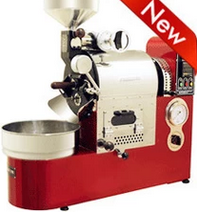
The working principle of Tae-hwan coffee machine South Korea Tae-hwan PROASTER coffee roaster 5KG THCR-03
Tai Huan PROASTER THCR-O1 coffee machine is a model model used in major bakeries in China. THCR01 baking achieves a rich flavor, using radiant heat system baking, and thermal explosion. This Taihuan PROASTER THCR-O1 coffee machine is a model model used in major bakeries in China. Compared with others, it is a rare baking machine, and it is the same amount of other baking.

There are still many problems behind the popularity of Korean coffee, don't blindly follow the trend!
Korean coffee has developed rapidly in recent years, in addition to well-known brands such as diffuse coffee, coffee and other well-known brands, shanzhai brands are also emerging one after another, blooming everywhere. There are still many problems behind the popularity of Korean coffee, the cost is high, the pressure is high, and the core competitiveness needs to be further cultivated. What is the current market environment for Korean coffee? Where is the bottleneck? What are the prospects? Want to open a Korean coffee shop

Yunnan coffee output reached 139000 tons at the end of the annual coffee harvest season.
The huge consumption potential of China's coffee market obviously gives Yunnan coffee industry great confidence. Figures show that at present, the annual per capita coffee consumption in China is only 4 cups, and even in Beijing and Shanghai, the per capita annual consumption is only 20 cups, which is far lower than 40 cups in Taiwan, 240 cups in South Korea, 200 cups in Japan, and about 400 cups in the United States and other European countries.

The struggle among the three factions of Chinese cafes in the Internet era
Quickly expand the cafe, carving time into the Internet, Starbucks to do direct camp, coffee with you, diffuse coffee and other Korean coffee is still busy to join, behind the mellow coffee shop, the market competition has entered a white-hot stage. Titanium media note: China's current per capita annual coffee consumption is 5 cups, which is far lower than the annual per capita level of about 300 cups in Japan and South Korea.